TN Agrees to Share Water with Kerala

December 12, 2013

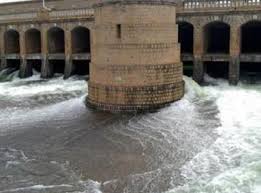
TN_AgreesCoimbatore, Dec 12: Tamil Nadu has agreed to release water to Kerala as per the Parambikulam Aliyar Project (PAP) agreement for irrigation this year. The agreement was reached at a meeting in the city on Wednesday.

As per the PAP agreement between the two States, signed decades ago, Tamil Nadu has to release 7.25 TMC of water from Aliyar dam near Pollachi and 12.3 TMC of water from Sholayar dam in Valparai to Kerala throughout the year.

Tamil Nadu released to Kerala 9.3 TMC from Sholayar dam and 3.5 TMC from Aliyar dam between July and November this year, sources said.

Officials of both States have agreed to share the remaining water from the dam. Kerala’s share would be released before end of June next year.

“The storage in the dam is enough and the remaining water would be released to Kerala without delay,” said a Tamil Nadu official.

Earlier, Kerala officials had demanded the ‘arrears’, water which was not released to them last year.

Comments

Add new comment

  • Coastaldigest.com reserves the right to delete or block any comments.
  • Coastaldigset.com is not responsible for its readers’ comments.
  • Comments that are abusive, incendiary or irrelevant are strictly prohibited.
  • Please use a genuine email ID and provide your name to avoid reject.
Agencies
July 30,2020

Mumbai, Jul 30: Counterfeiting incidents have increased 24 per cent in the country in 2019 over the previous year, creating an over Rs 1 lakh crore hole in the economy, according to a report.

The report also said counterfeiters are having a free run due to the pandemic-driven disruptions to organised supply chains and the resultant spike in consumer demand.

According to the report by ASPA, a self-regulated industry body of anti-counterfeiting and traceability solutions providers, counterfeiting has risen steadily in the last few years, and exploiting the pandemic as a cover for their activities.

Between February and April 2020, over 150 incidents of counterfeiting cases were reported, mostly about fake PPE kits, sanitisers and masks taking advantage of the high demand for these products, it noted.

"There was a 24 per cent increase in counterfeiting in 2019 over 2018, leading to the loss of more than Rs 1 lakh crore to the overall economy," said Nakul Pasricha, president of Authentication Solution Providers Association.

The association works with global authorities like the International Hologram Manufacturers Association, Counterfeit Intelligence Bureau of the Interpol, and domestic industry lobbies like Ficci, he said.

Counterfeiting is a universal issue and is 3.3 per cent of global trade, according to the OECD data, impacting social and economic development across the world.

The report lists the currency, FMCG, alcohol, pharma, documents, agriculture, infrastructure, automotive, tobacco, lifestyle and apparel, as the 10 sectors impacted most by counterfeiting.

Among these, currency, alcohol and FMCG continue to be the top three sectors with the highest counterfeiting in the last two years. The FMCG sector is most vulnerable, as counterfeit incidents rose 63 per cent between 2018 (79) and 2019 when the reported cases jumped to 129.

Within the states, the fakers have a free run in Uttar Pradesh, Bihar, Rajasthan, Madhya Pradesh, Bengal, Punjab, Jharkhand, Delhi, Gujarat, and Uttarakhand, calling for urgent actions to frame anti-counterfeiting policy measures.

According to the report, UP continues to be on top followed by Bihar, Rajasthan, and together these three states represent almost 45 per cent of all counterfeiting reported in the last two years.

What is more alarming is that counterfeiting is not limited to high-end luxury items today, as common everyday items as fake cumin seeds, mustard cooking oil, ghee, hair oils, soaps, baby care vaccines and medicines are aplenty in the markets.

"There is an urgent need for building and nurturing authentication ecosystems in the country with the active involvement and active participation of all stakeholders," said Pasricha.


Comments

Add new comment

  • Coastaldigest.com reserves the right to delete or block any comments.
  • Coastaldigset.com is not responsible for its readers’ comments.
  • Comments that are abusive, incendiary or irrelevant are strictly prohibited.
  • Please use a genuine email ID and provide your name to avoid reject.
News Network
January 28,2020

New Delhi, Jan 28: Kolkata Metro Rail Corp expects to complete its East-West project, which runs partly under the city’s iconic Hooghly river, by March 2022 after a delay of several years doubled costs.

The authority is awaiting a final installment of Rs 20 crore ($2.8 million) over the next two years from the Indian Railway Board, said Manas Sarkar, managing director at KMRC. A soft loan of Rs 4,160 crore from Japan International Cooperation Agency helps fund 48.5% of the project.

India’s oldest metro, which started in 1984 with a North-South service, was due to expand by 2014 but faced problems including squatters on the planned route. These issues have contributed to the total project cost rising to about Rs 8,600 crore for some 17 kilometers from Rs 4,900 crore for 14 km.

“About 40% of total transport demand will be tackled by these two metro services,” Sarkar said in an interview at his office in Kolkata. “It will be a relief for environmental pollution and the city should be much more decongested.”

The new line is expected to carry about 900,000 people daily, -- roughly 20% of the city’s population -- and will take less than a minute to cross a 520-meter underwater tunnel. Depending on the time of day, it takes some 20 minutes to use the ferry and anywhere upward of an hour to cross the Howrah bridge.

KMRC will repay the JICA loan over 30 years after an initial six-year moratorium. The interest rate is between 1.2% to 1.6%. The East-West metro project is 74% owned by the railway ministry and 26% by the ministry of housing and urban affairs.

“We don’t anticipate any further cost escalation now,” Sarkar said.

Comments

Add new comment

  • Coastaldigest.com reserves the right to delete or block any comments.
  • Coastaldigset.com is not responsible for its readers’ comments.
  • Comments that are abusive, incendiary or irrelevant are strictly prohibited.
  • Please use a genuine email ID and provide your name to avoid reject.
News Network
February 19,2020

London, Feb 19: Indian universities had a good performance year within the emerging economies of the world as a record 11 made it to the top 100 Times Higher Education's (THE) Emerging Economies University Rankings 2020.

Only China has more universities than India in the top 100 at 30 from a total of 47 countries and territories included in the analysis released in London on Tuesday evening.

A total of 56 Indian universities appear in the full ranking of a total of 533 universities across emerging economies of the world.

The Indian Institute of Science (IISc), ranked 16th, is India’s top-ranked institution followed by the Indian Institute of Technologies (IITs).

"There has long been a debate about the success of Indian universities in world rankings, and for too long they have been seen as underperforming on the global stage," notes Phil Baty, Chief Knowledge Officer for the THE.

"The Emerging Economies University Rankings 2020 suggests that real progress is being made by a number of institutions in a number of metrics across our robust methodology, and could mark an exciting turning point for Indian higher education, enabled in part by the Institutes of Eminence scheme," he said.

The Indian government’s Institutes of Eminence scheme was established in 2017 and one of its participating universities, Amrita Vishwa Vidyapeetham, has entered the top 100 for the first time, moving up a huge 51 places from joint 141st in 2019.

The other universities included in the Institutes of Eminence scheme that appear in the top 100 mark the biggest improvers in the ranking with IIT Kharagpur moving up 23 places to 32nd, IIT Delhi improving by 28 places to joint 38th and IIT Madras climbing 12 places to joint 63rd.

The Institutes of Eminence scheme provides participating universities with government funding and greater autonomy with the aim of moving them into the top 100 of the world university rankings, including Times Higher Education’s World University Ranking, over time.

The expectation is that this will be achieved through a number of changes including an increase in foreign students and staff, offering online courses and encouraging academic collaboration with other top universities around the world.

This year marks only the second time that 11 Indian institutions have held top 100 positions since the ranking began in 2014, when much fewer universities took part in the ranking globally.

Comments

Add new comment

  • Coastaldigest.com reserves the right to delete or block any comments.
  • Coastaldigset.com is not responsible for its readers’ comments.
  • Comments that are abusive, incendiary or irrelevant are strictly prohibited.
  • Please use a genuine email ID and provide your name to avoid reject.