


Top Donald Trump aide in frequent contact with Russia's ambassador

January 14, 2017

Washington, Jan 14: President-elect Donald Trump's national security adviser and Russia's ambassador to the US have been in frequent contact in recent weeks, including on the day the Obama administration hit Moscow with sanctions in retaliation for election-related hacking, a senior U.S. official said Friday.
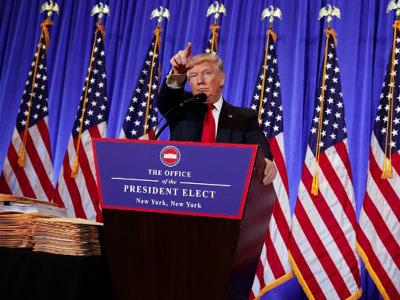
aideAfter initially denying that Flynn and Ambassador Sergey Kislyak spoke Dec. 29, a Trump official said late Friday that the transition team was aware of one call on the day President Barack Obama imposed sanctions.

It's not unusual for incoming administrations to have discussions with foreign governments before taking office. But repeated contacts just as Obama imposed sanctions would raise questions about whether Trump's team discussed — or even helped shape — Russia's response.

Russian President Vladimir Putin unexpectedly did not retaliate against the US for the move, a decision Trump quickly praised.

More broadly, Flynn's contact with the Russian ambassador suggests the incoming administration has already begun to lay the groundwork for its promised closer relationship with Moscow. That effort appears to be moving ahead, even as many in Washington, including Republicans, have expressed outrage over intelligence officials' assessment that Putin launched a hacking operation aimed at meddling in the US election to benefit Trump.

In an interview published Friday evening by The Wall Street Journal, Trump said he might do away with Obama's sanctions if Russia works with the US on battling terrorists and achieving other goals.

"If Russia is really helping us, why would anybody have sanctions?" he asked.

During a news conference Wednesday, Trump highlighted his warmer rapport with the Russian leader.

"If Putin likes Donald Trump, I consider that an asset, not a liability, because we have a horrible relationship with Russia," he said.

The sanctions targeted the GRU and FSB, leading Russian intelligence agencies that the U.S. said were involved in the hacking of the Democratic National Committee and other groups. The U.S. also kicked out 35 Russian diplomats who it said were actually intelligence operatives.

Trump has been willing to insert himself into major foreign policy issues during the transition, at times contradicting the current administration and diplomatic protocol. He accepted a call from Taiwan's president, ignoring the longstanding "One China" policy that does not recognize the island's sovereignty. He also publicly urged the U.S. to veto a United Nations Security Council resolution condemning Israeli settlements, then slammed the Obama administration for abstaining and allowing the measure to pass.

Questions about Trump's friendly posture toward Russia have deepened since the election, as he has dismissed US intelligence agencies' assertions about Russia's role in the hacking of Democratic groups. In briefing Trump on their findings, intelligence officials also presented the president-elect with unsubstantiated claims that Russia had amassed compromising personal and financial allegations about him, according to a separate U.S. official who spoke on the condition of anonymity because the official was not allowed to publicly discuss the matter.

The Senate Intelligence Committee announced late Friday that it would investigate possible contacts between Russia and people associated with U.S. political campaigns as part of a broader investigation into Moscow's meddling in the 2016 presidential election.

Trump acknowledged for the first time this week that he accepts that Russia was behind the hacking. But he questioned whether officials were leaking information about their meetings with him, warning that would be a "tremendous blot" on their record.

Flynn's own ties with Russia have worried some Republicans who are more skeptical of the Kremlin than Trump appears to be. After leaving his position as director of the Defense Intelligence Agency in 2014, Flynn made appearances on RT, a state-run Russian television network. In 2015, he was paid to attend an RT gala in Moscow, where he sat next to Putin.

As national security adviser, Flynn will work in the West Wing close to the Oval Office and will have frequent access to Trump. Unlike Trump's nominees to lead the Pentagon, State Department and other national security agencies, Flynn's post does not require Senate confirmation.

Flynn's contacts with the Russian ambassador were first reported by Washington Post columnist David Ignatius. The U.S. official who spoke to The Associated Press was not authorized to confirm the contacts publicly and insisted on anonymity.

The Trump team's account of Flynn's contacts with the Russian envoy changed throughout the day Friday.

Trump spokesman Sean Spicer initially said there was one phone call between Flynn and Kislyak on Dec. 28, as well as a Christmas greeting via text messages over the holidays. He said sanctions were not part of the discussions.

Later Friday, a transition official said Flynn and Kislyak had spoken by phone on Dec. 29, following a text message from the ambassador the day before. During the call, the Russian ambassador invited U.S. officials to a conference on Syria later this month that is being held in Kazakhstan, according to the transition official, who was not authorized to publicly discuss the matter and insisted on anonymity.

The official also confirmed a phone call between the men earlier in December.

The US official who spoke to the AP Friday described the contacts between Flynn and Kislyak as "very frequent."

It's unclear how US officials became aware of the contacts between Flynn and Kislyak, who has served as Russia's envoy to the US since 2008. U.S. monitoring of Russian officials' communication within the United States is known to be common.

Flynn has spoken with other foreign officials since Trump won the November election, as have incoming White House senior advisers Steve Bannon and Jared Kushner, Trump's son-in-law. State Department spokesman Mark Toner said he saw nothing inappropriate in Trump's transition team contacting Russian or any other foreign officials.

Comments

Add new comment

  • Coastaldigest.com reserves the right to delete or block any comments.
  • Coastaldigset.com is not responsible for its readers’ comments.
  • Comments that are abusive, incendiary or irrelevant are strictly prohibited.
  • Please use a genuine email ID and provide your name to avoid reject.
News Network
March 29,2020

Washington, Mar 29: The number of known coronavirus US cases soared well past 115,000, with more than 1,900 dead, as President Donald Trump said on Saturday he was considering imposing a quarantine on the hard hit New York region.

American healthcare workers in the trenches of the pandemic are appealing for more protective gear and equipment to treat a surge in patients that is already pushing hospitals to their limits in virus hot spots such as New York City, New Orleans and Detroit.

Trump told reporters he could order a quarantine on three states, New York, New Jersey and Connecticut, which between them have recorded at least 64,000 infections and 895 deaths.

He also appeared to soften his previous comments calling for the US economy to be swiftly reopened. Asked whether he thought the United States would restart by Easter Sunday, April 12, Trump replied, "We'll see, what happens."

New York Governor Andrew Cuomo said he had no details on any possible quarantine order for his state, telling a briefing: "I don't even know what that means. I don't know how that would be legally enforceable, and from a medical point of view I don't know what you would be accomplishing."

He said New York was postponing its presidential primary election to June 23, from April 28.

As the crisis deepened, nurses at Jacobi Medical Center in New York's borough of the Bronx protested outside the hospital on Saturday, saying supervisors asked them to reuse personal protective equipment, including masks. Some held signs with slogans including "Protect our lives so we can save yours."

"The masks are supposed to be one-time use," one nurse said, according to videos posted online. "Now, all of a sudden the CDC (Centers for Disease Control and Prevention) is saying that it's fine for us to reuse them. These choices are being made not based on science. They're being made based on need."

One resident at New York Presbyterian Hospital said they were issued with just one mask.

"This is your mask forever. You can bring it home with you. Here's how you can clean your mask," said the resident, who asked not to be named because he was not authorized to speak to the media. "It's not the people who are making these decisions that go into the patients' rooms."

Doctors are also especially concerned about a shortage of ventilators, machines that help patients breathe and are widely needed for those suffering from COVID-19, the pneumonia-like respiratory ailment caused by the highly contagious novel coronavirus.

Hospitals have also sounded the alarm about scarcities of drugs, oxygen tanks and trained staff.

By Saturday afternoon, the US number of cases stood at 115,842 with at least 1,929 deaths, according to a Reuters tally. The United States has had the most recorded cases of any country since its count of infections eclipsed those of China and Italy on Thursday.

BLACK MARKET
As shortages of key medical supplies abounded, desperate physicians and nurses were forced to take matters into their own hands.

New York-area doctors say they have had to recycle some protective gear, or even resort to bootleg suppliers.

Dr. Alexander Salerno of Salerno Medical Associates in northern New Jersey described going through a "broker" to pay $17,000 for masks and other protective equipment that should have cost about $2,500, and picking them up at an abandoned warehouse.

"You don't get any names. You get just phone numbers to text," Salerno said. "And so you agree to a term. You wire the money to a bank account. They give you a time and an address to come to."

Nurses at Mount Sinai Hospital in New York said they were locking away or hiding N95 respirator masks, surgical masks and other supplies that are prone to pilfering if left unattended.

"Masks disappear," nurse Diana Torres said. "We hide it all in drawers in front of the nurses' station."

One nurse at Westchester Medical Center, in the suburbs of the city, said colleagues have begun absconding with scarce supplies without asking, prompting better-stocked teams to lock masks, gloves and gowns in drawers and closets.

An emergency room doctor in Michigan, an emerging epicenter of the pandemic, said he was wearing one paper face mask for an entire shift due to a shortage and that hospitals in the Detroit area would soon run out of ventilators.

"We have hospital systems here in the Detroit area in Michigan who are getting to the end of their supply of ventilators and have to start telling families that they can't save their loved ones because they don't have enough equipment," the physician, Dr. Rob Davidson, said in a video posted on Twitter.

Sophia Thomas, a nurse practitioner at DePaul Community Health Center in New Orleans, where Mardi Gras celebrations late last month fueled an outbreak in Louisiana's largest city, said the numbers of coronavirus patients "have been staggering."

In the nation's second-largest city, Los Angeles Mayor Eric Garcetti said spiking cases were putting Southern California on track to match New York City's infection figures in the next week.

Comments

Add new comment

  • Coastaldigest.com reserves the right to delete or block any comments.
  • Coastaldigset.com is not responsible for its readers’ comments.
  • Comments that are abusive, incendiary or irrelevant are strictly prohibited.
  • Please use a genuine email ID and provide your name to avoid reject.
Agencies
June 6,2020

The President of United States Donald Trump has said that countries like India and China would have much more coronavirus cases than America if they conduct more tests.

“I say to my people every time we test; you find cases because we do more testing. If we have more cases, if we wanted to do testing in China or in India or other places, I promise you there would be more cases you are doing a fantastic job in getting out the swabs,” the US president said on Friday.

Trump said that the US has carried out 20 million tests while compared to America, Germany is at four million and much talked about South Korea is about three million tests. He made the remarks at Puritan Medical Products in Maine, according to Johns Hopkins Coronavirus Resource Center.

The US has reported nearly 1.9 million cases and over 1,09,000 deaths while the total number of coronavirus cases in India and China stand at 2,36,184 and 84,177 respectively, according to Johns Hopkins Coronavirus Resource Center data.

India has so far conducted over 4 million COVID-19 tests, according to the health ministry.

Trump said, “we will be well over 20 million tests. Remember this, when you test more, you have more cases.”

“Puritan is one of the only manufacturers in the world producing high-quality medical swabs that are crucial for rapid testing. And every swab you make at Puritan is proudly stamped with the beautiful phrase made in the USA,” Trump said.

“Thanks to the testing capacity that you are making possible, our country is reopening and our economy is recovering like nobody would’ve thought possible,” he added.

Trump also spoke about the huge unemployment problem the country is currently facing. He said that the economy is now back on track, referring to the latest monthly employment numbers,.

“We absolutely shattered expectations, and this is the largest monthly jobs increase in American history, think of that; that’s a long time,” Trump said

“I think it’s more than double or about double of what our highest was before so this is the largest monthly job increase in American history. And we’re going to have a phenomenal next year. We’re going to have a tremendous couple of months prior to the election on November 3 very, very important date,” the president said.

Keeping an eye on the November 3 presidential elections, Trump is seeking re-election for his second consecutive term. He is pitted against Democratic presidential nominee Joe Biden who in opinion polls is surging several points of Trump.

“It’s going to be a very important election because the only thing that can screw it up is if you get the wrong president and they raise your taxes, and they open up your borders so that everybody pours into our country,” Trump said.

Trump also vowed to bring the American economy back on track, which has been badly hit by the coronavirus pandemic. He reiterated that his administration has built a strong economy in the last three years.

Describing the fight against coronavirus as the greatest national and industrial mobilisation since the World War II, Trump said that his administration has marshaled the full power of the US government and US industry to defeat the invisible enemy.

“It is indeed an enemy. It came from China, should have been stopped in China. They didn’t do that,” he alleged.

The administration, he said, has delivered over 1.5 billion pieces of personal protective equipment to doctors and nurses on the front lines. We slashed the red tape to speed up the development of vaccines.

“And vaccines are coming along incredibly well, wait till you see, and therapeutics. And we partnered at private sector leaders such as Puritan to build the largest and most advanced testing capacity on the face of the earth, like this one,” the US president said.

The Puritan factory in Maine, he said, quickly ramped up the production to produce nearly 20 million foam-tipped swabs each month.

“Then in April, my administration invoked the Defence Production Act to help you scale up even more. Under a USD 75 million public-private partnership, Puritan will soon double production to 40 million swabs per month,” Trump added.

Comments

Add new comment

  • Coastaldigest.com reserves the right to delete or block any comments.
  • Coastaldigset.com is not responsible for its readers’ comments.
  • Comments that are abusive, incendiary or irrelevant are strictly prohibited.
  • Please use a genuine email ID and provide your name to avoid reject.
News Network
February 2,2020

Feb 2: The Philippines on Sunday reported the first death from a new virus outside of China, where authorities delayed the opening of schools in the worst-hit province and tightened quarantine measures in a city that allow only one family member to venture out to buy supplies.

The Philippine Department of Health said a 44-year-old Chinese man from Wuhan was admitted on Jan. 25 after experiencing a fever, cough, and sore throat. He developed severe pneumonia, and in his last few days, “the patient was stable and showed signs of improvement, however, the condition of the patient deteriorated within his last 24 hours resulting in his demise.”

The man’s 38-year-old female companion, also from Wuhan, also tested positive for the virus and remains in hospital isolation in Manila.

President Rodrigo Duterte approved a temporary ban on all travelers, except Filipinos, from China and its autonomous regions. The U.S., Japan, Singapore and Australia have imposed similar restrictions despite criticism from China and an assessment from the World Health Organization that they were unnecessarily hurting trade and travel.

The death toll in China climbed by 45 to 304 and the number of cases by 2,590 to 14,380, according to the National Health Commission, well above the number of those infected in in the 2002-03 outbreak of SARS, or severe acute respiratory syndrome, which broke out in southern China and spread worldwide.

Meanwhile, six officials in the city of Huanggang, neighboring the epicenter of Wuhan in Hubei province, have been fired over “poor performance” in handling the outbreak, the official Xinhua News Agency reported.

It cited the mayor as saying the city’s “capabilities to treat the patients remained inadequate and there is a severe shortage in medical supplies such as protective suits and medical masks.”

After Huanggang, the trading center of Wenzhou in coastal Zhejiang province also confined people to homes, allowing only one family member to venture out every other day to buy necessary supplies.

With the outbreak showing little sign of abating, authorities in Hubei and elsewhere have extended the Lunar New Year holiday, due to end this week, well into February. The annual travel crunch of millions of people returning from their hometowns to the cities is thought to pose a major threat of secondary infection at a time when authorities are encouraging people to avoid public gatherings.

All Hubei schools will postpone the opening of the new semester until further notice and students from elsewhere who visited over the holiday will also be excused from classes.

Far away on China’s southeast coast, the manufacturing hub of Wenzhou put off the opening of government offices until Feb. 9, private businesses until Feb. 17 and schools until March 1.

With nearly 10 million people, Wenzhou has reported 241 confirmed cases of the virus, one of the highest levels outside Hubei. Similar measures have been announced in the provinces and cities of Heilongjiang, Shandong, Guizhou, Hebei and Hunan, while the major cities of Shanghai and Beijing were on indefinite leave pending developments.

Despite imposing drastic travel restrictions at home, China has chafed at those imposed by foreign governments, criticizing Washington’s order barring entry to most non-citizens who visited China in the past two weeks. Apart from dinging China’s international reputation, such steps could worsen a domestic economy already growing at its lowest rate in decades.

The crisis is the latest to confront Chinese leader Xi Jinping, who has been beset by months of anti-government protests in the semi-autonomous Chinese city of Hong Kong, the reelection of Taiwan’s pro-independence president and criticism over human rights violations in the traditionally Muslim northwestern territory of Xinjiang. Economically, Xi faces lagging demand and dramatically slower growth at home while the tariff war with the U.S. remains largely unresolved.

Among a growing number of airlines suspending flights to mainland China was Qatar Airways. The Doha-based carrier said on its website that its flights would stop Monday. It blamed “significant operational challenges caused by entry restrictions imposed by a number of countries” for the suspension of flights.

Oman also halted flights to China, as did Saudi Arabia’s flagship national carrier, Saudia.

Saudi Arabia’s state-run TV reported that 10 Saudi students were evacuated from Wuhan on a special flight. It said the students would be screened upon arrival, but did not say whether they would be quarantined for 14 days.

This weekend, South Korea and India flew hundreds of their citizens out of Wuhan. They went into a two-week quarantine.

On Sunday, South Korea reported three more cases for a total of 15. They include an evacuee, a Chinese relative of a man who tested positive and a man who returned from Wuhan. India reported a second case, also in southern Kerala state.

South Korea also barred foreigners who have stayed or traveled to Hubei province within the last 14 days from entering the country.

Indonesia flew back 241 nationals from Wuhan on Sunday and quarantined them on the remote Natuna Islands for two weeks. Several hundred residents protested the move, with one saying, “This is not because we do not have a sense of solidarity with fellow nationals. But because we fear they could infect us with the deadly virus from China.”

A Turkish military transport plane carrying 42 people arrived in Ankara from Wutan Saturday night. The 32 Turkish, six Azerbaijani, three Georgian nationals and an Albanian will remain under observation for 14 days, together with 20 personnel who participated in the evacuation, Health Minister Fahrettin Koca said.

Vietnam counted its seventh case, a Vietnamese-American man who had a two-hour layover in Wuhan on his way from the U.S. to Ho Chi Minh City.

The virus’ rapid spread in two months prompted the WHO on Thursday to declare it a global emergency.

That declaration “flipped the switch” from a cautious attitude to recommending governments prepare for the possibility the virus might spread, said the WHO representative in Beijing, Gauden Galea. Most cases reported so far have been people who visited China or their family members.

WHO said it was especially concerned that some cases abroad involved human-to-human transmission.

“Countries need to get ready for possible importation in order to identify cases as early as possible and in order to be ready for a domestic outbreak control, if that happens,” Galea told The Associated Press.

Both the new virus and SARS are from the coronavirus family, which also includes those that cause the common cold.

The death rate in China is falling, but the number of confirmed cases will keep growing because thousands of specimens from suspected cases have yet to be tested, Galea said.

“The case fatality ratio is settling out at a much lower level than we were reporting three, now four, weeks ago,” he said.

Although scientists expect to see limited transmission of the virus between people with family or other close contact, they are concerned about cases of infection spreading to people who might have less exposure.

Comments

Add new comment

  • Coastaldigest.com reserves the right to delete or block any comments.
  • Coastaldigset.com is not responsible for its readers’ comments.
  • Comments that are abusive, incendiary or irrelevant are strictly prohibited.
  • Please use a genuine email ID and provide your name to avoid reject.