


Top Donald Trump aide in frequent contact with Russia's ambassador

January 14, 2017

Washington, Jan 14: President-elect Donald Trump's national security adviser and Russia's ambassador to the US have been in frequent contact in recent weeks, including on the day the Obama administration hit Moscow with sanctions in retaliation for election-related hacking, a senior U.S. official said Friday.
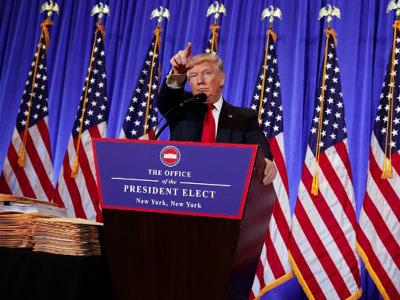
aideAfter initially denying that Flynn and Ambassador Sergey Kislyak spoke Dec. 29, a Trump official said late Friday that the transition team was aware of one call on the day President Barack Obama imposed sanctions.

It's not unusual for incoming administrations to have discussions with foreign governments before taking office. But repeated contacts just as Obama imposed sanctions would raise questions about whether Trump's team discussed — or even helped shape — Russia's response.

Russian President Vladimir Putin unexpectedly did not retaliate against the US for the move, a decision Trump quickly praised.

More broadly, Flynn's contact with the Russian ambassador suggests the incoming administration has already begun to lay the groundwork for its promised closer relationship with Moscow. That effort appears to be moving ahead, even as many in Washington, including Republicans, have expressed outrage over intelligence officials' assessment that Putin launched a hacking operation aimed at meddling in the US election to benefit Trump.

In an interview published Friday evening by The Wall Street Journal, Trump said he might do away with Obama's sanctions if Russia works with the US on battling terrorists and achieving other goals.

"If Russia is really helping us, why would anybody have sanctions?" he asked.

During a news conference Wednesday, Trump highlighted his warmer rapport with the Russian leader.

"If Putin likes Donald Trump, I consider that an asset, not a liability, because we have a horrible relationship with Russia," he said.

The sanctions targeted the GRU and FSB, leading Russian intelligence agencies that the U.S. said were involved in the hacking of the Democratic National Committee and other groups. The U.S. also kicked out 35 Russian diplomats who it said were actually intelligence operatives.

Trump has been willing to insert himself into major foreign policy issues during the transition, at times contradicting the current administration and diplomatic protocol. He accepted a call from Taiwan's president, ignoring the longstanding "One China" policy that does not recognize the island's sovereignty. He also publicly urged the U.S. to veto a United Nations Security Council resolution condemning Israeli settlements, then slammed the Obama administration for abstaining and allowing the measure to pass.

Questions about Trump's friendly posture toward Russia have deepened since the election, as he has dismissed US intelligence agencies' assertions about Russia's role in the hacking of Democratic groups. In briefing Trump on their findings, intelligence officials also presented the president-elect with unsubstantiated claims that Russia had amassed compromising personal and financial allegations about him, according to a separate U.S. official who spoke on the condition of anonymity because the official was not allowed to publicly discuss the matter.

The Senate Intelligence Committee announced late Friday that it would investigate possible contacts between Russia and people associated with U.S. political campaigns as part of a broader investigation into Moscow's meddling in the 2016 presidential election.

Trump acknowledged for the first time this week that he accepts that Russia was behind the hacking. But he questioned whether officials were leaking information about their meetings with him, warning that would be a "tremendous blot" on their record.

Flynn's own ties with Russia have worried some Republicans who are more skeptical of the Kremlin than Trump appears to be. After leaving his position as director of the Defense Intelligence Agency in 2014, Flynn made appearances on RT, a state-run Russian television network. In 2015, he was paid to attend an RT gala in Moscow, where he sat next to Putin.

As national security adviser, Flynn will work in the West Wing close to the Oval Office and will have frequent access to Trump. Unlike Trump's nominees to lead the Pentagon, State Department and other national security agencies, Flynn's post does not require Senate confirmation.

Flynn's contacts with the Russian ambassador were first reported by Washington Post columnist David Ignatius. The U.S. official who spoke to The Associated Press was not authorized to confirm the contacts publicly and insisted on anonymity.

The Trump team's account of Flynn's contacts with the Russian envoy changed throughout the day Friday.

Trump spokesman Sean Spicer initially said there was one phone call between Flynn and Kislyak on Dec. 28, as well as a Christmas greeting via text messages over the holidays. He said sanctions were not part of the discussions.

Later Friday, a transition official said Flynn and Kislyak had spoken by phone on Dec. 29, following a text message from the ambassador the day before. During the call, the Russian ambassador invited U.S. officials to a conference on Syria later this month that is being held in Kazakhstan, according to the transition official, who was not authorized to publicly discuss the matter and insisted on anonymity.

The official also confirmed a phone call between the men earlier in December.

The US official who spoke to the AP Friday described the contacts between Flynn and Kislyak as "very frequent."

It's unclear how US officials became aware of the contacts between Flynn and Kislyak, who has served as Russia's envoy to the US since 2008. U.S. monitoring of Russian officials' communication within the United States is known to be common.

Flynn has spoken with other foreign officials since Trump won the November election, as have incoming White House senior advisers Steve Bannon and Jared Kushner, Trump's son-in-law. State Department spokesman Mark Toner said he saw nothing inappropriate in Trump's transition team contacting Russian or any other foreign officials.

Comments

Add new comment

  • Coastaldigest.com reserves the right to delete or block any comments.
  • Coastaldigset.com is not responsible for its readers’ comments.
  • Comments that are abusive, incendiary or irrelevant are strictly prohibited.
  • Please use a genuine email ID and provide your name to avoid reject.
News Network
February 1,2020

Washington, Feb 1: The Indian economy experienced some abrupt slowdown in 2019 due to turbulence in non-banking financial institutions and major reform measures such as GST and demonetisation, but it is not in a recession, IMF Managing Director Kristalina Georgieva has said.

"The Indian economy indeed has experienced an abrupt slowdown in 2019. We had to revise our growth projections, downwards to four percent for last year. We are expecting 5.8 per cent (growth rate) in 2020 and then an upward trajectory to 6.5 percent in 2021," Georgieva told a group of foreign journalists here on Friday.

"It appears that the main reason for this slowdown was the non-banking financial institutions experiencing a turbulence," she said on the eve of Union Finance Minister Nirmala Sitharaman presenting the annual budget in Parliament on Saturday.

She said India had undertaken some important reforms that over the longer term would be beneficial for the country, but they do have some short-term impact.

"For example, coming with the unified tax system, and the demonetisation that took place. These are steps that over time are beneficial, but of course they might, might be somewhat disruptive over short term," Georgieva said in response to a question.

The International Monetary Fund (IMF) Managing Director said that there is not a lot of fiscal space in India. “But we also recognise that the policies of the government on that side, on the fiscal side have been prudent. We will see how the reading of the budget, the submission of the budget goes, tomorrow,” she said.

In the medium-term, she said, the IMF remains optimistic about India. “This is why we see that upswing potential for the growth in the country,” she said.

Georgieva said that the current economic slowdown cannot be described as a recession. "No.... You're far from that. But it is a significant slowdown, not the recession," she said.

The IMF managing Director noted that the consumption in India also slowed down and that contributed to the overall slowdown in the economy. The IMF would be keen to see what India does to get relatively sound macroeconomic fundamentals to pay off in terms of better growth trajectory, she said ahead of the budget.

One thing that is important for India is that budgetary revenue have been below target. "The country knows that. The finance minister knows it. They need to increase budgetary revenue collection so they can improve their fiscal position. I said it's tight on the spending side, but I also want to stress that there is room to improve collection on the revenue side," she said.

Comments

Add new comment

  • Coastaldigest.com reserves the right to delete or block any comments.
  • Coastaldigset.com is not responsible for its readers’ comments.
  • Comments that are abusive, incendiary or irrelevant are strictly prohibited.
  • Please use a genuine email ID and provide your name to avoid reject.
News Network
May 12,2020

London, May 12: British Prime Minister Boris Johnson has warned that a mass vaccine for the novel coronavirus may be over a year away and, in the worst-case scenario, may in fact never be found.

In his foreword to the government’s new 50-page guidance on a step by step easing of the lockdown measures in place to control the spread of the deadly virus, the UK prime minister lays out plans for businesses to gradually start reopening with “COVID-19 Secure” measures of social distancing and for the public to use “good solid British common sense” as the economy is unlocked.

“A mass vaccine or treatment may be more than a year away,” said Johnson, highlighting the work being done in the UK by scientists at Oxford University and Imperial College London towards this mission.

“Indeed, in a worst-case scenario, we may never find a vaccine. So our plan must countenance a situation where we are in this, together, for the long haul, even while doing all we can to avoid that outcome,” he said.

Admitting that a vaccine or drug-based treatment is the only “feasible long-term solution”, he said the UK has accelerated this with “promising” vaccine development programmes and a collaboration between Oxford University and pharma major AstraZeneca was a vital step that could help rapidly advance the manufacture of a Covid-19 vaccine when it is ready.

As part of global efforts, he flagged the GBP 388 million in aid funding for research into vaccines, tests and treatment, including GBP 250m to the Coalition for Epidemic Preparedness Innovations.

“But while we hope for a breakthrough, hope is not a plan,” he said, as he unveiled his plan for starting to lift lockdown restrictions from this week in phases.

Following a televised address to the nation on Sunday night and a statement in Parliament on Monday, the guidance comes into effect in public life across England from Wednesday when people will be allowed one-to-one contact with people other than those they live with, as long as they remain outside and two metres apart.

They are allowed to play sport with a friend or family member from outside their household or socialise with them in the open air for the first time in more than six weeks since the lockdown was imposed.

People are still advised to work from home where possible but start heading into work where necessary, in sectors such as construction and manufacturing, keeping the social distancing norms in place.

Under the step by step plan, by the start of next month non-essential shops will also reopen, with some hairdressers, pubs and cinemas to follow from July. However, as part of a Covid-19 Alert System, if infection rates are seen to be rising again, restrictions would be tightened “possibly at short notice”.

Fines for breaching the new rules will also be increased to GBP 100 and will double for each repeat offence, up to a maximum of GBP 3,200.

Johnson said: "I must ask the country to be patient with a continued disruption to our normal way of life, but to be relentless in pursuing our mission to build the systems we need. The worst possible outcome would be a return to the virus being out of control – with the cost to human life, and – through the inevitable re-imposition of severe restrictions – the cost to the economy. We must stay alert, control the virus, and in doing so, save lives.

“Then, as vaccines and treatment become available, we will move to another new phase, where we will learn to live with Covid-19 for the longer term without it dominating our lives.”

The devolved administrations of Scotland and Wales are putting their own measures in place and keeping the “stay at home” message in place, rather than switch to the new “stay alert” message.

The UK government’s latest messaging has come under attack from the Opposition and other sections of society over a feared lack of clarity for the general public.

Comments

Add new comment

  • Coastaldigest.com reserves the right to delete or block any comments.
  • Coastaldigset.com is not responsible for its readers’ comments.
  • Comments that are abusive, incendiary or irrelevant are strictly prohibited.
  • Please use a genuine email ID and provide your name to avoid reject.
News Network
July 1,2020

Tehran, Jul 1 As many as 19 people have been killed in an explosion and fire at a medical facility in Tehran.

A total of 19 people, including 15 men and 4 women, were killed in the explosion, the emergency services confirmed, RT reported citing KhabarOnline website.

According to a regional official, a gas leak caused the incident. Sputnik quoted a deputy head of Tehran police as saying to YJC news outlet that oxygen tanks exploded in the semi-basement of the clinic.

Comments

Add new comment

  • Coastaldigest.com reserves the right to delete or block any comments.
  • Coastaldigset.com is not responsible for its readers’ comments.
  • Comments that are abusive, incendiary or irrelevant are strictly prohibited.
  • Please use a genuine email ID and provide your name to avoid reject.