


Top Donald Trump aide in frequent contact with Russia's ambassador

January 14, 2017

Washington, Jan 14: President-elect Donald Trump's national security adviser and Russia's ambassador to the US have been in frequent contact in recent weeks, including on the day the Obama administration hit Moscow with sanctions in retaliation for election-related hacking, a senior U.S. official said Friday.
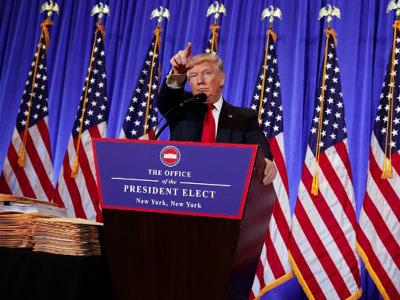
aideAfter initially denying that Flynn and Ambassador Sergey Kislyak spoke Dec. 29, a Trump official said late Friday that the transition team was aware of one call on the day President Barack Obama imposed sanctions.

It's not unusual for incoming administrations to have discussions with foreign governments before taking office. But repeated contacts just as Obama imposed sanctions would raise questions about whether Trump's team discussed — or even helped shape — Russia's response.

Russian President Vladimir Putin unexpectedly did not retaliate against the US for the move, a decision Trump quickly praised.

More broadly, Flynn's contact with the Russian ambassador suggests the incoming administration has already begun to lay the groundwork for its promised closer relationship with Moscow. That effort appears to be moving ahead, even as many in Washington, including Republicans, have expressed outrage over intelligence officials' assessment that Putin launched a hacking operation aimed at meddling in the US election to benefit Trump.

In an interview published Friday evening by The Wall Street Journal, Trump said he might do away with Obama's sanctions if Russia works with the US on battling terrorists and achieving other goals.

"If Russia is really helping us, why would anybody have sanctions?" he asked.

During a news conference Wednesday, Trump highlighted his warmer rapport with the Russian leader.

"If Putin likes Donald Trump, I consider that an asset, not a liability, because we have a horrible relationship with Russia," he said.

The sanctions targeted the GRU and FSB, leading Russian intelligence agencies that the U.S. said were involved in the hacking of the Democratic National Committee and other groups. The U.S. also kicked out 35 Russian diplomats who it said were actually intelligence operatives.

Trump has been willing to insert himself into major foreign policy issues during the transition, at times contradicting the current administration and diplomatic protocol. He accepted a call from Taiwan's president, ignoring the longstanding "One China" policy that does not recognize the island's sovereignty. He also publicly urged the U.S. to veto a United Nations Security Council resolution condemning Israeli settlements, then slammed the Obama administration for abstaining and allowing the measure to pass.

Questions about Trump's friendly posture toward Russia have deepened since the election, as he has dismissed US intelligence agencies' assertions about Russia's role in the hacking of Democratic groups. In briefing Trump on their findings, intelligence officials also presented the president-elect with unsubstantiated claims that Russia had amassed compromising personal and financial allegations about him, according to a separate U.S. official who spoke on the condition of anonymity because the official was not allowed to publicly discuss the matter.

The Senate Intelligence Committee announced late Friday that it would investigate possible contacts between Russia and people associated with U.S. political campaigns as part of a broader investigation into Moscow's meddling in the 2016 presidential election.

Trump acknowledged for the first time this week that he accepts that Russia was behind the hacking. But he questioned whether officials were leaking information about their meetings with him, warning that would be a "tremendous blot" on their record.

Flynn's own ties with Russia have worried some Republicans who are more skeptical of the Kremlin than Trump appears to be. After leaving his position as director of the Defense Intelligence Agency in 2014, Flynn made appearances on RT, a state-run Russian television network. In 2015, he was paid to attend an RT gala in Moscow, where he sat next to Putin.

As national security adviser, Flynn will work in the West Wing close to the Oval Office and will have frequent access to Trump. Unlike Trump's nominees to lead the Pentagon, State Department and other national security agencies, Flynn's post does not require Senate confirmation.

Flynn's contacts with the Russian ambassador were first reported by Washington Post columnist David Ignatius. The U.S. official who spoke to The Associated Press was not authorized to confirm the contacts publicly and insisted on anonymity.

The Trump team's account of Flynn's contacts with the Russian envoy changed throughout the day Friday.

Trump spokesman Sean Spicer initially said there was one phone call between Flynn and Kislyak on Dec. 28, as well as a Christmas greeting via text messages over the holidays. He said sanctions were not part of the discussions.

Later Friday, a transition official said Flynn and Kislyak had spoken by phone on Dec. 29, following a text message from the ambassador the day before. During the call, the Russian ambassador invited U.S. officials to a conference on Syria later this month that is being held in Kazakhstan, according to the transition official, who was not authorized to publicly discuss the matter and insisted on anonymity.

The official also confirmed a phone call between the men earlier in December.

The US official who spoke to the AP Friday described the contacts between Flynn and Kislyak as "very frequent."

It's unclear how US officials became aware of the contacts between Flynn and Kislyak, who has served as Russia's envoy to the US since 2008. U.S. monitoring of Russian officials' communication within the United States is known to be common.

Flynn has spoken with other foreign officials since Trump won the November election, as have incoming White House senior advisers Steve Bannon and Jared Kushner, Trump's son-in-law. State Department spokesman Mark Toner said he saw nothing inappropriate in Trump's transition team contacting Russian or any other foreign officials.

Comments

Add new comment

  • Coastaldigest.com reserves the right to delete or block any comments.
  • Coastaldigset.com is not responsible for its readers’ comments.
  • Comments that are abusive, incendiary or irrelevant are strictly prohibited.
  • Please use a genuine email ID and provide your name to avoid reject.
Agencies
June 26,2020

Scientists predict the world may have a COVID-19 vaccine within one year or even a few months earlier, said the Director-General of the World Health Organisation even as he underlined the importance of global cooperation to develop, manufacture and distribute vaccines.

However, making the vaccine available and distributing it to all will be a challenge and requires political will, Tedros Adhanom Ghebreyesus said on Thursday during a meeting with the European Parliament's Committee for Environment, Public Health and Food Safety.

One option would be to give the vaccine only to those that are most vulnerable to the virus.

There are currently over 100 COVID-19 vaccine candidates in various stages of development.

Adhanom Ghebreyesus said the pandemic has highlighted the importance of global solidarity and that health should not be seen as a cost but an investment.

He added that all countries in the world must strengthen primary health care and crisis preparedness and stressed the need for EU leadership globally.

While the Director-General said the situation in the EU has improved significantly, he underlined that COVID-19 is very much still circulating globally, with more than four million new cases in the last month.

Many Members of European Parliament said that the global community must cooperate including in developing, manufacturing and distributing vaccines against COVID-19 and asked when a safe vaccine could be available.

Several Members of European Parliament underlined the importance of the WHO but also said it has made mistakes in its response to the pandemic.

The Director-General admitted everyone makes mistakes and informed the members that an independent panel will evaluate the WHO response to the pandemic to learn from any mistakes made.

It will start its work soon, he said.

Comments

Add new comment

  • Coastaldigest.com reserves the right to delete or block any comments.
  • Coastaldigset.com is not responsible for its readers’ comments.
  • Comments that are abusive, incendiary or irrelevant are strictly prohibited.
  • Please use a genuine email ID and provide your name to avoid reject.
Agencies
August 7,2020

Washington, Aug 7: US President Donald Trump on Thursday (local time) signed executive orders halting all transactions with Chinese applications TikTok and WeChat within 45 days, citing national security concerns, further escalating the tensions between Beijing and Washington.

"WeChat, a messaging, social media, and electronic payment application owned by the Chinese company Tencent Holdings Ltd., reportedly has over one billion users worldwide, including users in the United States. Like TikTok, WeChat automatically captures vast swaths of information from its users. 

This data collection threatens to allow the Chinese Communist Party (CCP) access to Americans' personal and proprietary information," Trump said in a statement.

Citing reasons for the ban on WeChat, the US President said that the application captures the personal and proprietary information of Chinese nationals visiting the US, thereby providing the CCP a mechanism to keep tabs on the Chinese citizens who may be "enjoying the benefits of a free society for the first time in their lives".

"In March 2019, a researcher reportedly discovered a Chinese database containing billions of WeChat messages sent from users in not only China but also the United States, Taiwan, South Korea and Australia. WeChat, like TikTok, also reportedly censors content that the CCP deems politically sensitive and may also be used for disinformation campaigns that benefit the CCP. 

These risks have led other countries, including Australia and India, to begin restricting or banning the use of WeChat. The US must take aggressive action against the owner of WeChat to protect our national security," he added.

Earlier, Trump had issued an order banning TikTok as it "reportedly censors content that the CCP deems politically sensitive, such as content concerning protests in Hong Kong and China's treatment of Uighurs and other Muslim minorities. 

TikTok may also be used for disinformation campaigns that benefit the CCP."
US politicians have repeatedly criticised TikTok, owned by Beijing-based startup ByteDance, of being a threat to national security because of its ties to China.

The development comes as China and the US are at loggerheads on a variety of issues including Hong Kong national security law, the South China Sea, the novel coronavirus and trade.

Comments

Add new comment

  • Coastaldigest.com reserves the right to delete or block any comments.
  • Coastaldigset.com is not responsible for its readers’ comments.
  • Comments that are abusive, incendiary or irrelevant are strictly prohibited.
  • Please use a genuine email ID and provide your name to avoid reject.
Agencies
February 20,2020

Tokyo, Feb 20: One more Indian on board the cruise ship Diamond Princess quarantined off the coast of Japan was tested positive for novel coronavirus, the Indian Embassy in Tokyo said on Wednesday, adding that all seven Indian nationals infected with the virus have been shifted to hospitals in Japan for treatment.

"1 Indian crew who tested positive for #COVID19 among 88 new cases yesterday on #DiamondPrincess taken to hospital for treatment. Indians receiving treatment responding well. From today, the disembarkation of passengers only started, likely to continue till 21 Feb," the embassy tweeted.

"As of 2100 JST, altogether 7 Indian nationals (crew members on board #DiamondPrincess) are receiving treatment in hospitals in Japan, after testing positive for #COVID19 over last few days. Their health conditions are improving. 
@MEAIndia," the following tweet read.

A total of 138 Indians, including 132 crew and 6 passengers, were among the 3,711 people on board the luxury cruise ship which was quarantine off Japan on February 5 after it emerged that a former passenger had tested positive for the virus.

Comments

Add new comment

  • Coastaldigest.com reserves the right to delete or block any comments.
  • Coastaldigset.com is not responsible for its readers’ comments.
  • Comments that are abusive, incendiary or irrelevant are strictly prohibited.
  • Please use a genuine email ID and provide your name to avoid reject.