



UN demands action after Sri Lanka anti-Muslim riot

June 17, 2014

Alutgama, Jun 17: Sri Lanka slapped an indefinite curfew in a popular tourist region on Monday after rioting Buddhist mobs killed three Muslims in a surge of religious violence that triggered international concern.
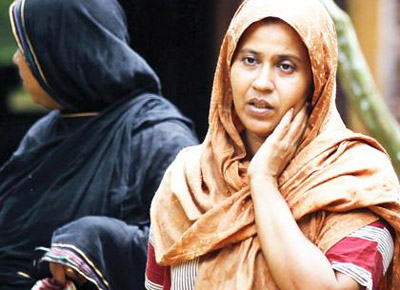
Riot-victim grievesLocal community leaders accused authorities of doing little to prevent Sunday night's carnage that made hundreds of Muslims homeless after attacks on their homes, shops, factories, mosques and even a nursery.

The most senior Muslim member of President Mahinda Rajapakse's government threatened to resign at the decision to allow militant Buddhists to rally in the flashpoint region.

"Three deaths have occurred and 78 people have been seriously wounded in the mob attacks... Places of Muslim religious worship have also been attacked with total impunity," Justice Minister Rauf Hakeem said as he toured the damage in the neighbouring towns of Alutgama and Beruwala.

"The government allowed the Bodu Bala Sena (BBS) to hold their gathering and therefore they must take responsibility for what has happened," he said, referring to a hardline outfit better known as the Buddhist Force.

Hakeem told reporters that he was now under pressure from his own supporters to quit the government to protest the failure to prevent the attacks, the latest in a series of violent incidents involving the BBS.

The UN human rights chief Navi Pillay expressed concern that the religious riots could spread to other areas of Sri Lanka and demanded that Colombo immediately bring the perpetrators of Sunday's attacks to justice.

"The government must urgently do everything it can to arrest this violence, curb the incitement and hate speech which is driving it, and protect all religious minorities," Pillay said in a statement issued in Geneva.

"I am very concerned this violence could spread to Muslim communities in other parts of the country," she added.

The United States, which has led international condemnation of Sri Lanka's human rights record, had also urged Colombo to end the violence.

The unrest erupted on Sunday night when followers of the BBS staged a protest over a recent road rage incident in the area.

After stones were allegedly thrown at them, the BBS supporters then tore through the two towns, attacking people on the street and setting fire to property and vehicles.

Local residents said police did little to protect them when the Buddhist mobs started their onslaught around sundown in the mainly Muslim towns which are around 60 kilometres (37 miles) south of the capital Colombo.

Police fired teargas and imposed a night-time curfew but the violence went on for several hours, according to residents.

"We pleaded with the police to come and stop the mob attacking our houses but the police did nothing," said Mujahedeen, a resident of Alutgama's Milton Road where around a dozen buildings were set on fire.

Police chief NK Illangakoon said the situation was "improving" although the curfew would remain overnight Monday.

He said eight people had been arrested in connection with the riots, but added that an unspecified number of them had already been freed on bail.

President urges 'restraint'

Both towns are popular beach resorts frequented by international tourists, but there were no reports of any foreigners or hotels being caught up in the violence.

However, hotels told their guests to remain indoors while Western embassies advised their nationals to avoid travelling to the region.

Rajapakse, currently in Bolivia, said in a statement that he would not allow "anyone to take the law into their own hands" and urged "restraint".

The attacks are the latest in a series of religious clashes to hit the island following unrest in January and also last year when Buddhist mobs attacked a mosque in the capital Colombo.

BBS leader, Buddhist monk Galagodaatte Gnanasara, is currently on bail after being arrested in May on a charge of insulting the Quran.

Sri Lanka, facing an international probe of its war record in crushing separatists Tamil rebels in may 2009, is also criticised for its alleged failure to protect minority religious groups.

Muslims make up about 10 percent of Sri Lanka's 20 million population.

Normal
0

false
false
false

EN-US
X-NONE
X-NONE

MicrosoftInternetExplorer4

UN demands action after Sri Lanka anti-Muslim riot

Alutgama, Jun 17: Sri Lanka slapped an indefinite curfew in a popular tourist region on Monday after rioting Buddhist mobs killed three Muslims in a surge of religious violence that triggered international concern.

Local community leaders accused authorities of doing little to prevent Sunday night's carnage that made hundreds of Muslims homeless after attacks on their homes, shops, factories, mosques and even a nursery.

The most senior Muslim member of President Mahinda Rajapakse's government threatened to resign at the decision to allow militant Buddhists to rally in the flashpoint region.

"Three deaths have occurred and 78 people have been seriously wounded in the mob attacks... Places of Muslim religious worship have also been attacked with total impunity," Justice Minister Rauf Hakeem said as he toured the damage in the neighbouring towns of Alutgama and Beruwala.

"The government allowed the Bodu Bala Sena (BBS) to hold their gathering and therefore they must take responsibility for what has happened," he said, referring to a hardline outfit better known as the Buddhist Force.

Hakeem told reporters that he was now under pressure from his own supporters to quit the government to protest the failure to prevent the attacks, the latest in a series of violent incidents involving the BBS.

The UN human rights chief Navi Pillay expressed concern that the religious riots could spread to other areas of Sri Lanka and demanded that Colombo immediately bring the perpetrators of Sunday's attacks to justice.

"The government must urgently do everything it can to arrest this violence, curb the incitement and hate speech which is driving it, and protect all religious minorities," Pillay said in a statement issued in Geneva.

"I am very concerned this violence could spread to Muslim communities in other parts of the country," she added.

The United States, which has led international condemnation of Sri Lanka's human rights record, had also urged Colombo to end the violence.

The unrest erupted on Sunday night when followers of the BBS staged a protest over a recent road rage incident in the area.

After stones were allegedly thrown at them, the BBS supporters then tore through the two towns, attacking people on the street and setting fire to property and vehicles.

Local residents said police did little to protect them when the Buddhist mobs started their onslaught around sundown in the mainly Muslim towns which are around 60 kilometres (37 miles) south of the capital Colombo.

Police fired teargas and imposed a night-time curfew but the violence went on for several hours, according to residents.

"We pleaded with the police to come and stop the mob attacking our houses but the police did nothing," said Mujahedeen, a resident of Alutgama's Milton Road where around a dozen buildings were set on fire.

Police chief NK Illangakoon said the situation was "improving" although the curfew would remain overnight Monday.

He said eight people had been arrested in connection with the riots, but added that an unspecified number of them had already been freed on bail.

President urges 'restraint'

Both towns are popular beach resorts frequented by international tourists, but there were no reports of any foreigners or hotels being caught up in the violence.

However, hotels told their guests to remain indoors while Western embassies advised their nationals to avoid travelling to the region.

Rajapakse, currently in Bolivia, said in a statement that he would not allow "anyone to take the law into their own hands" and urged "restraint".

The attacks are the latest in a series of religious clashes to hit the island following unrest in January and also last year when Buddhist mobs attacked a mosque in the capital Colombo.

BBS leader, Buddhist monk Galagodaatte Gnanasara, is currently on bail after being arrested in May on a charge of insulting the Quran.

Sri Lanka, facing an international probe of its war record in crushing separatists Tamil rebels in may 2009, is also criticised for its alleged failure to protect minority religious groups.

Muslims make up about 10 percent of Sri Lanka's 20 million population.

Comments

Add new comment

  • Coastaldigest.com reserves the right to delete or block any comments.
  • Coastaldigset.com is not responsible for its readers’ comments.
  • Comments that are abusive, incendiary or irrelevant are strictly prohibited.
  • Please use a genuine email ID and provide your name to avoid reject.
Agencies
July 2,2020

Moscow, Jul 2: Russian voters approved changes to the constitution that will allow President Vladimir Putin to hold power until 2036, but the weeklong plebiscite that concluded Wednesday was tarnished by widespread reports of pressure on voters and other irregularities.

With most of the nation's polls closed and 20% of precincts counted, 72% voted for the constitutional amendments, according to election officials.

For the first time in Russia, polls were kept open for a week to bolster turnout without increasing crowds casting ballots amid the coronavirus pandemic a provision that Kremlin critics denounced as an extra tool to manipulate the outcome.

A massive propaganda campaign and the opposition's failure to mount a coordinated challenge helped Putin get the result he wanted, but the plebiscite could end up eroding his position because of the unconventional methods used to boost participation and the dubious legal basis for the balloting.

By the time polls closed in Moscow and most other parts of Western Russia, the overall turnout was at 65%, according to election officials. In some regions, almost 90% of eligible voters cast ballots.

On Russia's easternmost Chukchi Peninsula, nine hours ahead of Moscow, officials quickly announced full preliminary results showing 80% of voters supported the amendments, and in other parts of the Far East, they said over 70% of voters backed the changes.

Kremlin critics and independent election observers questioned the turnout figures.

We look at neighboring regions, and anomalies are obvious there are regions where the turnout is artificially (boosted), there are regions where it is more or less real, Grigory Melkonyants, co-chair of the independent election monitoring group Golos, told The Associated Press.

Putin voted at a Moscow polling station, dutifully showing his passport to the election worker. His face was uncovered, unlike most of the other voters who were offered free masks at the entrance.

The vote completes a convoluted saga that began in January, when Putin first proposed the constitutional changes.

He offered to broaden the powers of parliament and redistribute authority among the branches of government, stoking speculation he might seek to become parliamentary speaker or chairman of the State Council when his presidential term ends in 2024.

His intentions became clear only hours before a vote in parliament, when legislator Valentina Tereshkova, a Soviet-era cosmonaut who was the first woman in space in 1963, proposed letting him run two more times.

The amendments, which also emphasize the primacy of Russian law over international norms, outlaw same-sex marriages and mention a belief in God as a core value, were quickly passed by the Kremlin-controlled legislature.

Putin, who has been in power for more than two decades longer than any other Kremlin leader since Soviet dictator Josef Stalin said he would decide later whether to run again in 2024.

He argued that resetting the term count was necessary to keep his lieutenants focused on their work instead of darting their eyes in search for possible successors.

Analyst Gleb Pavlovsky, a former Kremlin political consultant, said Putin's push to hold the vote despite the fact that Russia has thousands of new coronavirus infections each day reflected his potential vulnerabilities.

Putin lacks confidence in his inner circle and he's worried about the future, Pavlovsky said.

He wants an irrefutable proof of public support.

Even though the parliament's approval was enough to make it law, the 67-year-old Russian president put his constitutional plan to voters to showcase his broad support and add a democratic veneer to the changes.

But then the coronavirus pandemic engulfed Russia, forcing him to postpone the April 22 plebiscite.

The delay made Putin's campaign blitz lose momentum and left his constitutional reform plan hanging as the damage from the virus mounted and public discontent grew.

Plummeting incomes and rising unemployment during the outbreak have dented his approval ratings, which sank to 59%, the lowest level since he came to power, according to the Levada Center, Russia's top independent pollster.

Moscow-based political analyst Ekaterina Schulmann said the Kremlin had faced a difficult dilemma: Holding the vote sooner would have brought accusations of jeopardizing public health for political ends, while delaying it raised the risks of defeat.

Holding it in the autumn would have been too risky, she said.

In Moscow, several activists briefly lay on Red Square, forming the number 2036 with their bodies in protest before police stopped them.

Some others in Moscow and St. Petersburg staged one-person pickets and police didn't intervene.

Several hundred opposition supporters rallied in central Moscow to protest the changes, defying a ban on public gatherings imposed for the coronavirus outbreak. Police didn't intervene and even handed masks to the participants.

Authorities mounted a sweeping effort to persuade teachers, doctors, workers at public sector enterprises and others who are paid by the state to cast ballots. Reports surfaced from across the vast country of managers coercing people to vote.

The Kremlin has used other tactics to boost turnout and support for the amendments.

Comments

Add new comment

  • Coastaldigest.com reserves the right to delete or block any comments.
  • Coastaldigset.com is not responsible for its readers’ comments.
  • Comments that are abusive, incendiary or irrelevant are strictly prohibited.
  • Please use a genuine email ID and provide your name to avoid reject.
News Network
January 30,2020

New York, Jan 30: Three Indian citizens were arrested by border patrol agents here for entering the US illegally.

US Border Patrol agents stopped a vehicle near Massena in New York state along the county's northern border on January 24. During the vehicle checking, the agents found that two of the passengers were Indian citizens who entered the US illegally and not at a designated port of entry.

Both the passengers were transported to the Border Patrol Station for processing and charged.

The vehicle driver, also an Indian citizen who originally entered illegally into the US in 2012 and was ordered removed from the country in absentia last December, was charged with alien smuggling, a felony, which carries a penalty of a fine and up to five years of imprisonment for each violation.

Comments

Add new comment

  • Coastaldigest.com reserves the right to delete or block any comments.
  • Coastaldigset.com is not responsible for its readers’ comments.
  • Comments that are abusive, incendiary or irrelevant are strictly prohibited.
  • Please use a genuine email ID and provide your name to avoid reject.
News Network
January 3,2020

New Delhi, Jan 3: US aviation regulator Federal Aviation Administration on Thursday warned America's airlines and their pilots that there is risk involved in operating flights in Pakistan airspace due to "extremist or militant activity", according to an official document.

"Exercise caution during flight operations. There is a risk to US civil aviation operating in the territory and airspace of Pakistan due to extremist/militant activity," said the US Federal Aviation Administration (FAA) in a notice to airmen (NOTAM) dated December 30, 2019.

The NOTAM is applicable to all US-based airlines and US-based pilots.

The US regulator said in its NOTAM that there continues to be a risk to US civil aviation sector from attacks against airports and aircraft in Pakistan, particularly for aircraft on the ground and aircraft operating at low altitudes, including during the arrival and departure phases of flights.

"The ongoing presence of extremist/militant elements operating in Pakistan poses a continued risk to US civil aviation from small-arms fire, complex attacks against airports, indirect weapons fire, and anti-aircraft fire, any of which could occur with little or no warning," it said.

The FAA said that while, to date, there have been no reports of man-portable air defense systems or Manpads being used against the civil aviation sector in Pakistan, some extremist or terrorist groups operating there are suspected of having access to these Manpads.

"As a result, there is potential risk for extremists/militants to target civil aviation in Pakistan with Manpads," it said.

The regulator added that pilots or airlines must report safety or security incidents - which may happen in Pakistan - to the FAA.

Pakistan on July 16 last year opened its airspace for India after about five months of restrictions imposed in the wake of a standoff with New Delhi.

Following the Balakot airstrikes by the Indian Air Force, Pakistan had closed its airspace on February 26 last year.

Pakistan in October last year had denied India's request to allow Prime Minister Narendra Modi's VVIP flight to use its airspace for his visit to Saudi Arabia over the Jammu and Kashmir issue.

Comments

Add new comment

  • Coastaldigest.com reserves the right to delete or block any comments.
  • Coastaldigset.com is not responsible for its readers’ comments.
  • Comments that are abusive, incendiary or irrelevant are strictly prohibited.
  • Please use a genuine email ID and provide your name to avoid reject.