



Understanding Kashmir Imbroglio 2016

[email protected] (Ram Puniyani)
October 4, 2016

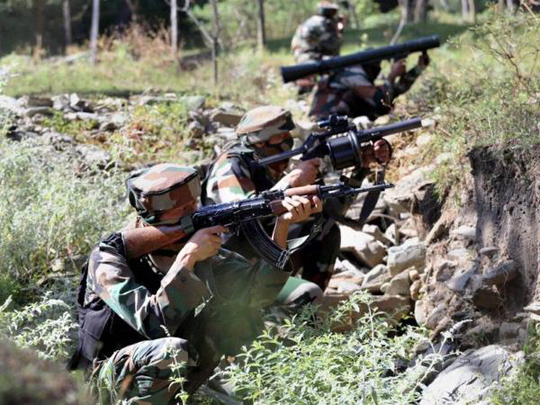
In the din of hysteria created around the military action on LOC, which was in response to the killing of 18 Indian army jawans in Uri, the issue of anguish of people of Kashmir has been undermined. As such India-Pakistan skirmishes (September 2016) are mostly centered on the issue of Kashmir. On one side India’s claim is that Kashmir is the inseparable part of India and no power on the Earth can separate it from India. Pakistan on the other hand raises doubts about the Kashmir’s accession to India, and says that as it is a Muslim majority area and it should be part of Pakistan. The attack on Uri by terrorists killing 18Indian soldiers has rekindled the issue once again. The whole episode actually begins with the killing of Burhan Wani, a Hijbul Mujahideen commandant who was killed in an encounter by Indian military. After his killing there were two types of reactions yet again.
Imbroglio

Indian media presented it as a big achievement in cracking down the militancy. A section of Kashmiri people was shocked and they started coming on streets to protest. The manner of their protests has been that of stone throwing on the police-military forces. In the the painful incidents which followed nearly 80 people have been killed, over 9000 people got injured and many of those injured suffered the pellet injuries leading to the loss of their eyes and penetration of pellets into different parts of their body. Some army-police personnel have also received injuries. The resulting situation led to the imposition of curfew in the state and this curfew had been the longest curfew which was imposed in the state.

In an attempt to restore peace various efforts have been made by the state. Home minister Rajnath Sigh visited the Valley to hold discussions with the state leaders. His and the stand of Government of India has been that they will not hold talks with the separatist leaders. When all party delegation visited the Valley some of the members of the delegation like Sitaram Yechury and D. Raja tried to meet separatist leader S A R Gilani, who refused to meet them.

Curfew was lifted after nearly two months, but the situation remains tense. With the attack by the terrorists in Uri; the whole focus has shifted to the issue of terrorism. As such as for as the disturbance in Kashmir is concerned the Government is alleging that the protestors are mere 5% of the population and they are being instigated by Pakistan. Surely Pakistan has some role in keeping the Kashmir issue alive to bake its own political bread. But the discontent of the section of Kashmir people has been simmering and has reached a peak in last few years. The youth in particular are disgruntled due to the feeling of alienation. The people of Kashmir are double victims. The acts of terror are a regular nuisance to the peace in the valley. No less is the violation of the civic rights of the people from armed forces. The Armed Forces Special Powers act, which is operational in the area, gives impunity to the armed personnel leading the regular harassment of the innocent civilians in the area.

Amnesty reports emanating from Kashmir tell us the extent of such violations. Amnesty International’s report released in Bangalore begins with defining the scale of human rights violations in Kashmir that have been perpetrated by security forces personnel with glaring impunity. The report states that from 1990 to 2011, the Jammu and Kashmir state government reportedly recorded a total of over 43,000 people killed. Of those killed, 21,323 were said to be ‘militants’ 13,226 ‘civilians’ (those not directly involved in the hostilities) killed by armed groups, 5,369 security force personnel killed by armed groups, and 3,642 “civilians” killed by security forces.

The AFSPA, which gives army sweeping powers, leads to extrajudicial executions and other human rights violations. Section seven of the AFSPA makes it mandatory to seek the prior sanction of Central and State authorities in order to prosecute any security force personnel in civilian courts. Under the pretext of protecting national security, the excesses of the security forces go unchallenged. 96% of all complaints brought against the army in Jammu & Kashmir have been dismissed as “false and baseless” or “with other ulterior motives of maligning the image of Armed Forces”.

It is in under these circumstances that every incident in Kashmir acts as a flaring point and the youth in particular come to streets to protest in large number. Their deeper dissatisfaction with the state of prevailing affairs is very painful. In the civilian areas there is a practical army rule, nearly six lakh of army personnel have been deployed there for years. The people of Kashmir do not have the feel of democracy from years and this leads to a deeper dissatisfaction, it is not just a Pakistan inspired problem, while the role of Pakistan in instigating the protests is very much there.

What is the way out? The UPA II had set up the three member interlocutors committee, which in their report wanted the clauses of autonomy of Kashmir Assembly restored, they emphasized on dialogue with the dissident militants and with Pakistan. There has been a constant demand to repeal AFSPA from the region and to reduce the number of armed personnel in the area. The present coalition of PDP and BJP which is ruling the state is very ruthless as far as dealing with dissidence is concerned; their stand of not talking with dissidents has prolonged the restlessness in the area. With Pakistan’s role; the attack on Uri and before that in Pathankot has vitiated the atmosphere further. One remembers that during election campaign the BJP used to assert that with Modi in the seat of power, terrorists dare not attack! That hollow boast stands exposed. The need for peace in the area, the need to give the Kashmiri people as era of calm is needed in the urgent manner. Pakistan needs to be engaged on the matters related to Kashmir. The treaty of accession of 1948 giving autonomy to Kashmir needs to be respected. The report of interlocutors was a major and balanced approach on the issue. It needs to be brought forth and considered seriously for bringing in peace in the region.

Comments

Add new comment

  • Coastaldigest.com reserves the right to delete or block any comments.
  • Coastaldigset.com is not responsible for its readers’ comments.
  • Comments that are abusive, incendiary or irrelevant are strictly prohibited.
  • Please use a genuine email ID and provide your name to avoid reject.
Ram Puniyani
February 10,2020

Noam Chomsky is one of the leading peace workers in the world. In the wake of America’s attack on Vietnam, he brought out his classic formulation, ‘manufacturing consent’. The phrase explains the state manipulating public opinion to have the public approve of it policies—in this case, the attack of the American state on Vietnam, which was then struggling to free itself from French colonial rule.

In India, we are witness to manufactured hate against religious minorities. This hatred serves to enhance polarisation in society, which undermines India’s democracy and Constitution and promotes support for a Hindu nation. Hate is being manufactured through multiple mechanisms. For example, it manifests in violence against religious minorities. Some recent ghastly expressions of this manufactured hate was the massive communal violence witnessed in Mumbai (1992-93), Gujarat (2002), Kandhamal (2008) and Muzaffarnagar (2013). Its other manifestation was in the form of lynching of those accused of having killed a cow or consumed beef. A parallel phenomenon is the brutal flogging, often to death, of Dalits who deal with animal carcasses or leather.

Yet another form of this was seen when Shambhulal Regar, indoctrinated by the propaganda of Hindu nationalists, burned alive Afrazul Khan and shot the video of the heinous act. For his brutality, he was praised by many. Regar was incited into the act by the propaganda around love jihad. Lately, we have the same phenomenon of manufactured hate taking on even more dastardly proportions as youth related to Hindu nationalist organisations have been caught using pistols, while police authorities look on.

Anurag Thakur, a BJP minster in the central government recently incited a crowd in Delhi to complete his chant of what should happen to ‘traitors of the country...” with a “they should be shot”. Just two days later, a youth brought a pistol to the site of a protest at Jamia Millia Islamia university and shouted “take Azaadi!” and fired it. One bullet hit a student of Jamia. This happened on 30 January, the day Nathuram Godse had shot Mahatma Gandhi in 1948. A few days later, another youth fired near the site of protests against the CAA and NRC at Shaheen Bagh. Soon after, he said that in India, “only Hindus will rule”.

What is very obvious is that the shootings by those associated with Hindu nationalist organisations are the culmination of a long campaign of spreading hate against religious minorities in India in general and against Muslims in particular. The present phase is the outcome of a long and sustained hate campaign, the beginning of which lies in nationalism in the name of religion; Muslim nationalism and Hindu nationalism. This sectarian nationalism picked up the communal view of history and the communal historiography which the British introduced in order to pursue their ‘divide and rule’ policy.

In India what became part of “social common sense” was that Muslim kings had destroyed Hindu temples, that Islam was spread by force, and that it is a foreign religion, and so on. Campaigns, such as the one for a temple dedicated to the Hindu god Rama to be built at the site where the Babri masjid once stood, further deepened the idea of a Muslim as a “temple-destroyer”. Aurangzeb, Tipu Sultan and other Muslim kings were tarnished as the ones who spread Islam by force in the subcontinent. The tragic Partition, which was primarily due to British policies, and was well-supported by communal streams also, was entirely attributed to Muslims. The Kashmir conflict, which is the outcome of regional, ethnic and other historical issues, coupled with the American policy of supporting Pakistan’s ambitions of regional hegemony, (which also fostered the birth of Al-Qaeda), was also attributed to the Muslims.

With recurring incidents of communal violence, these falsehoods went on going deeper into the social thinking. Violence itself led to ghettoisation of Muslims and further broke inter-community social bonds. On the one hand, a ghettoised community is cut off from others and on the other hand the victims come to be presented as culprits. The percolation of this hate through word-of-mouth propaganda, media and re-writing of school curricula, had a strong impact on social attitudes towards the minorities.

In the last couple of decades, the process of manufacturing hate has been intensified by the social media platforms which are being cleverly used by the communal forces. Swati Chaturvedi’s book, I Am a Troll: Inside the Secret World of the BJP’s Digital Army, tells us how the BJP used social media to spread hate. Whatapp University became the source of understanding for large sections of society and hate for the ‘Other’, went up by leaps and bounds. To add on to this process, the phenomenon of fake news was shrewdly deployed to intensify divisiveness.

Currently, the Shaheen Bagh movement is a big uniting force for the country; but it is being demonised as a gathering of ‘anti-nationals’. Another BJP leader has said that these protesters will indulge in crimes like rape. This has intensified the prevalent hate.

While there is a general dominance of hate, the likes of Shambhulal Regar and the Jamia shooter do get taken in by the incitement and act out the violence that is constantly hinted at. The deeper issue involved is the prevalence of hate, misconceptions and biases, which have become the part of social thinking.

These misconceptions are undoing the amity between different religious communities which was built during the freedom movement. They are undoing the fraternity which emerged with the process of India as a nation in the making. The processes which brought these communities together broadly drew from Gandhi, Bhagat Singh and Ambedkar. It is these values which need to be rooted again in the society. The communal forces have resorted to false propaganda against the minorities, and that needs to be undone with sincerity.

Combating those foundational misconceptions which create hatred is a massive task which needs to be taken up by the social organisations and political parties which have faith in the Indian Constitution and values of freedom movement. It needs to be done right away as a priority issue in with a focus on cultivating Indian fraternity yet again.

Comments

Add new comment

  • Coastaldigest.com reserves the right to delete or block any comments.
  • Coastaldigset.com is not responsible for its readers’ comments.
  • Comments that are abusive, incendiary or irrelevant are strictly prohibited.
  • Please use a genuine email ID and provide your name to avoid reject.
Ram Puniyani
February 22,2020

This January 2020, it is thirty years since the Kashmiri Pundits’ exodus from the Kashmir valley took place. They had suffered grave injustices, violence and humiliation prior to the migration away from the place of their social and cultural roots in Kashmir Valley. The phenomenon of this exodus had been due to the communalization of militancy in Kashmir in the decade of 1980s. While no ruling Government has applied itself enough to ‘solve’ this uprooting of pundits from their roots, there are communal elements who have been aggressively using ‘what about Kashmiri Pundits?’, every time liberal, human rights defenders talk about the plight of Muslim minority in India. This minority is now facing an overall erosion of their citizenship rights.

Time and over again in the aftermath of communal violence in particular, the human rights groups have been trying to put forward the demands for justice and rehabilitation of the victim minority. Instead of being listened to those particularly from Hindu nationalist combine, as a matter of routine shout back, where were you when Kashmiri Pundits were driven away from the Valley? In a way the tragedy being heaped on one minority is being justified in the name of suffering of Pundits and in the process violence is being normalized. This sounds as if two wrongs make a right, as if the suffering Muslim minority or those who are trying to talk in defense of minority rights have been responsible for the pain of Kashmiri Pundits.

During these three, many political formations have come to power, including BJP, Congress, third front and what have you. To begin with when the exodus took place Kashmir was under President’s rule and V. P. Singh Government was in power at the center. This Government had the external support of BJP at that time. Later BJP led NDA came to power for close to six years from 1998, under the leadership of Atal Bihari Vajpayee. Then from 2014 it is BJP, with Narerda Modi as PM, with BJP brute majority is in power. Other components of NDA are there to enjoy some spoils of power without any say in the policies being pursued by the Government. Modi is having absolute power with Amit Shah occasionally presenting Modi’s viewpoints.

Those blurting, ‘what about Kashmiri Pundits?’ are using it as a mere rhetoric to hide their communal color. The matters of Kashmir are very disturbing and cannot be attributed to be the making of Indian Muslims as it is being projected in an overt and subtle manner. Today, of course the steps taken by the Modi Government, that of abrogation of Article 370, abolition of clause 35 A, downgrading the status of Kashmir from a state to union territory have created a situation where the return of Kashmiri Pundits may have become more difficult, as the local atmosphere is more stifling and the leaders with democratic potential have been slapped with Public Safety Act, where they can be interned for long time without any answerability to the Courts. The internet had been suspended, communication being stifled in an atmosphere where democratic freedoms are curtailed which makes solution of any problem more difficult.

Kashmir has been a vexed issue where the suppression of the clause of autonomy, leading to alienation led to rise of militancy. This was duly supported by Pakistan. The entry of Al Qaeda elements, who having played their role against Russian army in 1980s entered into Kashmir and communalized the situation in Kashmir. The initial Kashmir militancy was on the grounds of Kashmiriyat. Kashmiriyat is not Islam, it is synthesis of teachings of Buddha, values of Vedant and preaching’s of Sufi Islam. The tormenting of Kashmiri Pundits begins with these elements entering Kashmir.

Also the pundits, who have been the integral part of Kashmir Valley, were urged upon by Goodwill mission to stay on, with local Muslims promising to counter the anti Pundit atmosphere. Jagmohan, the Governor, who later became a minister in NDA Government, instead of providing security to the Pundits thought, is fit to provide facilities for their mass migration. He could have intensified counter militancy and protected the vulnerable Pundit community. Why this was not done?

Today, ‘What about Kashmiri Pundits?’ needs to be given a serious thought away from the blame game or using it as a hammer to beat the ‘Muslims of India’ or human rights defenders? The previous NDA regime (2014) had thought of setting up enclosures of Pundits in the Valley. Is that a solution? Solution lies in giving justice to them. There is a need for judicial commission to identify the culprits and legal measures to reassure the Pundit community. Will they like to return if the high handed stifling atmosphere, with large number of military being present in the area? The cultural and religious spaces of Pundits need to be revived and Kashmiryat has to be made the base of any reconciliation process.

Surely, the Al Qaeda type elements do not represent the alienation of local Kashmiris, who need to be drawn into the process of dialogue for a peaceful Kashmir, which is the best guarantee for progress in this ex-state, now a Union territory. Communal amity, the hallmark of Kashmir cannot be brought in by changing the demographic composition by settling outsiders in the Valley. A true introspection is needed for this troubled area. Democracy is the only path for solving the emigration of Pundits and also of large numbers of Muslims, who also had to leave the valley due to the intimidating militancy and presence of armed forces in large numbers. One recalls Times of India report of 5th February 1992 which states that militants killed 1585 people from January 1990 to October 1992 out of which 982 were Muslims and 218 Hindus.

We have been taking a path where democratic norms are being stifled, and the promises of autonomy which were part of treaty of accession being ignored. Can it solve the problem of Pundits?

Comments

Add new comment

  • Coastaldigest.com reserves the right to delete or block any comments.
  • Coastaldigset.com is not responsible for its readers’ comments.
  • Comments that are abusive, incendiary or irrelevant are strictly prohibited.
  • Please use a genuine email ID and provide your name to avoid reject.
Ram Puniyani
January 26,2020

During last couple of decades we have been witnessing the coming up of various statues in different parts of the country. There is diverse political logic and different set of political tendencies for erecting these statues. When Mayawati was UP CM, she got multiple of her own statues made, in addition to many statues of major dalit icons, irrespective of the criticism against that act. As per her strategy it was a symbol of identity of dalit assertion. The biggest statue to come up was that of Sardar Vallabh Bhai Patel, a lifelong Congressman, whom RSS combine is trying to appropriate. This statue of Unity was ‘Made in China’. The clever trick was that the same forces were behind this statue, which was banned by Patel in the aftermath of Gandhi murder. Interestingly while currently BJP is blaming Congress for Partition of India, ironically it was Sardar Patel who was in the committee which gave final stamp of approval for the partition of India.

There is also a talk in UP, where the Ram temple campaign yielded rich electoral dividends for BJP, to have tallest statue of Lord Ram in Ayodhya. In a state where children are dying in hospitals due to lack of Oxygen cylinders, a huge budgetary allocation will be required for such project. While on statues one should also remember that in Maharashtra a tall statue of Chatrapati Shivaji Maharaj is underway in Arabian Sea, near Mumbai. Only few voices of protest against it came up, e.g. that of renowned journalist, now, MP, Kumar Ketkar, whose house was vandalised for his opposing the move on the grounds that same massive amount can be utilized for welfare-development activities in the state.

On the back of this comes a comparatively low budget 114 feet tall statue of Jesus Christ in Karnataka, in Kappala hills Harobele village, where Christian pilgrims have been thronging from last several centuries. The land for this has been donated by Congress leader Shivaprasad and his brother, a Congress MP. It is planned to be carved out from a single rock. The plan of this statue is being opposed by those who have been behind most of the statue projects so far. Hindu Jagran Vedike, VHP, RSS are up in arms saying that they will not let this come up. There are various arguments cited for this opposition. It is being said that this was a place of worship of Lord Munnieshwara (a form of Lord Shiva).

More than this it is being argued that Shivakumar is trying to please his Italian boss in the party. Also that this will bring back the period of slavery of foreign rule, the colonial rule of British. As such this opposition is more in tune with the ideology of RSS combine, which has been for a statue here and a statue there. Their politics regards Christianity as a ‘foreign religion’! It is true that in Citizenship Amendment Act, they have not excluded Christianity while other religion, which they regard as ‘Foreign’ i.e. Islam. Here they are using a different logic, that the countries from where persecuted minorities are coming, are Muslim countries, Pakistan, Afghanistan and Bangla Desh.

In India the major targeting by RSS combine has been against Muslims, but Christians are also not spared. Starting in the decade of 1980, an intense propaganda has been going on that Christian Missionaries are converting. As RSS affiliate Vanvasi Kalyan Ashram became active in Adivasi areas, the likes of Swami Aseemanand, Swami Laxmanand and followers of Aasaram bapu spread out in Tribal areas. They started their programs to popularise Shabri and Hanuman, with congregations like Shabri Kumbh being regularly organized in these areas. The aim was to Hinduize the people in those areas.

The first major anti Christian violence came up in the ghastly form of burning alive of Pastor Graham Steward Stains along with his two minor sons Timothy and Philip. RSS affiliate Bajrang Dal's Dara Siingh aka Rajendra Pal was behind this and he is serving the life term for that. At the same time Wadhva Commission was appointed to investigate this crime which shook the country and President K.R. Narayan termed it as the one belonging to the inventory of the black deeds of human history.

The Wadhva commission report pointed out that there was no statistical significant change in the region where the pastor was working. Similarly the national figures tell us that the Christian population, if at all, has marginally declined in last five decades as per the census figures. They stand like this, percentage of Christians in population, 1971-2.60, 1981- 2.44, 1991-2.34, 2001-2.30 and 2011-2.30. There are arguments that some people are converting to Christianity but are not revealing their religion. This may be true in case of miniscule percentage of dalits, who may not reveal there conversion, as they stand to loose reservation provisions if they convert.

The anti Christian violence is scattered and is below the radar most of the places. There was massive valence in Kandhamal, Orissa, when on the pretext that Christians have murdered Swami Laxmananand, a massive violence was unleashed in 2008. On regular basis prayer meetings of Christians are attacked on the pretext that these are attempts at conversion. While there is a huge demand for the schools and colleges run by Christian groups, in Adivasis areas and remote areas the work of Swamis is on.

Now the trend is to dump Christian traditions. Since Ramnath Kovind became President, the usual practice of Carol Singers visiting Rashtrapati Bhavan has been stopped. In the army retreat so far ‘Abide with me’ by Scottish poet, Henri Francis Lyte, a Christian song, a favourite of Gandhi, has been dropped. The Christian minorities have perceived the threat in various forms. Currently they are as much part of the protests against CAA, NPR and NRIC as any other community.

While statues and identity issues cannot have primacy over the social development issues, it cannot be selective. To oppose Jesus Christ statue while spending fortunes for other statues is a part of the agenda of RSS combine, which is unfolding itself in various forms. opposition to Jesus Christ statue being yet another step in the direction.

Comments

Add new comment

  • Coastaldigest.com reserves the right to delete or block any comments.
  • Coastaldigset.com is not responsible for its readers’ comments.
  • Comments that are abusive, incendiary or irrelevant are strictly prohibited.
  • Please use a genuine email ID and provide your name to avoid reject.