


Youth dies after cash over supplying copy chits during SSLC exam

April 17, 2016

Vijayapura, April 17: A youth, who suffered serious injuries in a clash over supplying copy chits to SSLC students on the premises of Shri Gurudev Ranade Jnanadhama High School at Nimbal R S village in Indi taluk on Wednesday, died at a hospital in Solapur on Friday.clash

The victim has been identified as Manjunath Mallappa Putani (24).

His father Ningappa Hanumanta Putani (45) was stabbed to death by three youths after he told them not to cause disturbance near SSLC examination centre on Wednesday.

Ningappa Putani had supplied copy chits to his son Ravi, who was taking the exam at the Gurudev Ranade High School, through the backdoor of the examination hall. As he was returning home along with his other son Hanumanta, 24, and nephew Manjunath, 24, he saw a group of inebriated youths from Kudagi creating scene near exam centre. He objected to this, saying the noise would disturb students writing the exam.

Three of the youths, enraged by the reprimand, stabbed Ningappa. When Hanumanta and Manjunath came to Ningappa's rescue, the group stabbed them too, Umesh Tadavalagi, an eyewitness, told media persons. While Ningappa died on the spot, Hanumanta and Manjunath, who suffered serious injuries, were rushed to a hospital.

The police have taken suspects Vilas Shivamurthy Biradar and Suresh Dhanyal into custody. The other suspect Basanagouda Biradar is absconding.

Comments

N S Mohammed
 - 
Sunday, 17 Apr 2016

I'm observing many typo errors of CD

Add new comment

  • Coastaldigest.com reserves the right to delete or block any comments.
  • Coastaldigset.com is not responsible for its readers’ comments.
  • Comments that are abusive, incendiary or irrelevant are strictly prohibited.
  • Please use a genuine email ID and provide your name to avoid reject.
News Network
August 2,2020

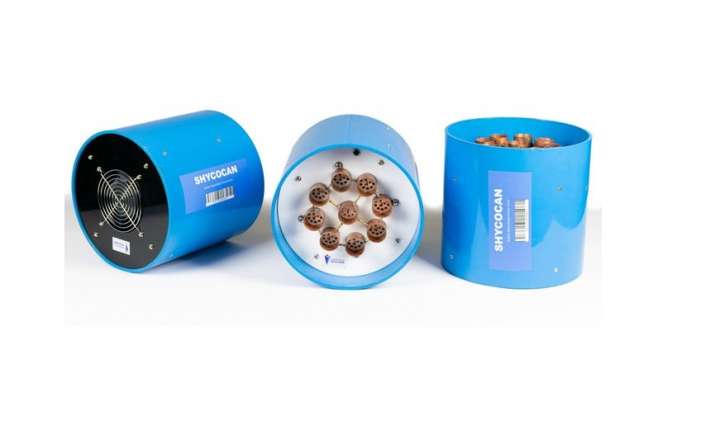
Bengaluru, Aug 2: Bengaluru based Centre for Advanced Research and Development (CARD), the research wing of organisation De scalene has come up with a device called "SHYCOCAN" (Scalene Hypercharge Corona Canon) which neutralizes the coronavirus.

Speaking to news agency Dr Rajah Vijay Kumar, Chairman, Organisation De Scalene said that the device will not kill any bacteria or fungus, however, neutralizes the coronavirus particles.

"The device was tested for its safety and efficacy and is soon going to be manufactured and marketed in the US under the Enforcement Discretion policy of USFDA and in Europe as the device is CE compliant and is CE marked," said Kumar.

He also added the device will cover a volume of 10,000 cubic feet.

The device Scalene Hypercharge Corona Canon (SHYCOCAN) is intended to be used in the residential, industrial and commercial environment and is designed for active containment by attenuation of Corona family of viruses. (Laboratories de Especialidades Immunological S.A. de C.V, Virucidal Activity concludes 99.9 per cent virus elimination), Kumar asserted.

"SHYCOCAN operates on regular 110/240V - 50/60 Hz wall socket and is a plug and play device, that delivers the necessary signals to a photon mediated electrons emitters (PMEE), that produces hypercharge high-velocity electrons by photon mediation that interacts with the negative seeking S-protein of Corona family of viruses thus reducing infectivity and prevent air and surface borne transmission of corona family of viruses," said Kumar.

The device does not use any chemicals, or any other consumables and does not produce harmful ozone gas or any other substances and is completely safe for use in any environment, he added.

"The attack mechanism of the Virus starts with the initial attachment of the virion to the host cell, it is initiated by interactions between the S-protein and its receptor on the "negative" cell membrane. The sites of receptor binding domains (RBD) within the S1 region of a coronavirus S-protein vary depending on the virus. 

The S-protein/receptor interaction is the primary determinant for a coronavirus to infect a host species and governs the tissue tropism of the virus. However, the end result is the fusion and release of the viral genome into the cytoplasm," said Kumar.

He continued saying that the counter mechanism by the device SHYCOCAN is that if negative seeking is the guidance mechanism of the S- Protein, attracted by the transmembrane potential of the host cells, then breaking this mechanism would block the Coronavirus infectivity and spread.

"The device has been in use for more than a year at the S-CARD campus, the headquarters of Scalene," said Kumar.

Comments

Add new comment

  • Coastaldigest.com reserves the right to delete or block any comments.
  • Coastaldigset.com is not responsible for its readers’ comments.
  • Comments that are abusive, incendiary or irrelevant are strictly prohibited.
  • Please use a genuine email ID and provide your name to avoid reject.
coastaldigest.com news network
April 13,2020

Mangaluru: The Karnataka-Kerala border closure at Talapady amidst nationwide Covid-19 lockdown has not only prevented the movement of vehicles and people from Kasaragod to Mangaluru but also stopped the supply of life-saving drugs from Karnataka’s medical hub to its bordering district.

Hundreds of people from Kasaragod and Kannur districts who were treated in hospitals of Mangaluru for past several years are still dependent on some of the medicines that are available only in Mangaluru. Such medicines have become inaccessible for Keralites following the border closure. Every day, a number of people from Kerala call their acquaintances in Mangaluru to see if there is a way to get medicine.

In fact, Karnataka government has blocked all 23 roads that connect the state with Kerala. The reason given was, Kasaragod is the hotbed of coronavirus and allowing traffic even in emergency cases might lead to spread of Covid-19 in border districts of Dakshina Kannada, Kodagu and Mysuru. The attitude has resulted in the death of around a dozen people in Kasaragod district in last couple of weeks.

Even after the intervention of the Supreme Court a few days ago, the authorities in Karnataka are facing the allegation of being hostile either by blocking the way ahead or turning a deaf ear to the patients reaching their border. 

At this juncture, three Good Samaritans – P K G Anoop Kumar of Canara Engineering College, Mangaluru, Satheesh Shetty of Kasaragod Patla and P Jayaprakash of Ponnangala – have come to the aid of the Malayalee patients who are dependent on medicines from Mangaluru. 

The three activists who are currently staying (in fact stranded amidst lockdown) in Mangaluru, are delivering life-saving medicines to patients in Kerala through Kerala fire servicemen and policemen posted at the Talapady border. 

Anoop Kumar says that took the initiative after a woman, Maria Augustine from Chemberi (Taliparamba) Nellikkutty, contacted him for a medicine. He managed to buy it from a medical store in the port city and handed it over to a Kerala fire serviceman at Talapady border. 

All three are activists of Communist Party of India (Marxist). After moving to Mangaluru, they set up ‘We Donate Charitable Society’ to donate blood. The activists say that they are ready to dispatch medicines from Mangaluru to any person in Kerala. Those Keralites who are in need of medicines from may contact: 888471344 - Anoop, 9895135881 - Jayaprakash

Comments

abdullah
 - 
Sunday, 21 Jun 2020

Salute to you dears.  May God bless you.  HOpe public and Govt will appreciate your sacrifice and support you.

Add new comment

  • Coastaldigest.com reserves the right to delete or block any comments.
  • Coastaldigset.com is not responsible for its readers’ comments.
  • Comments that are abusive, incendiary or irrelevant are strictly prohibited.
  • Please use a genuine email ID and provide your name to avoid reject.
coastaldigest.com news network
July 18,2020

Udupi, Jul 18: Noted multi-lingual scholar Dr Uliyar Padmanabha Upadhyaya passed away last night at a private hospital in Manipal. The 88-year-old was survived by a son and a daughter.

His wife Susheela Uadhyaya, who was also a multi-lingual scholar, had passed away in January 2014 at the age of 77. The duo had compiled the six-volume Tulu Lexicon. Its first volume was published in 1988 and the last volume in 1997.

Son of Sitaram Upadhyaya, who was a scholar in the court of the Raja of Travancore, Dr Padmanabha was born on April 10, 1932 at Uliyar in Majur Village near Kaup in Udupi district. 

The Upadhyaya couple had conducted serious research work in linguistics and folk culture and produced a number of books-some of them jointly, some individually and some in collaboration with others. 

Dr Padmanabha had acquired three Master of Arts degrees in Sanskrit, Kannada and Linguistics from Madras, Kerala and Pune Universities, Vidwan in Hindi and PhD in Linguistics from the Pune University for his thesis titled “A Comparative Study of Kannada Dialects”.

He was a visiting Professor at the Universities of London and Paris. He knew Hindi, Kannada, Tulu, Malayalam, Tamil, English, French and Olof, the language of Senegal in Africa.

His works include Nanjanagudu Kannada (Vokkaliga Dialect), Coorg Kannada, Kuruba - A Dravidian Language, Kannada - A Phonetic Language, Malayalam Language and Literature (with Ms. Susheela), Effect of Bilingualism on Bidar Kannada, Coimbatore Tamil, Kannada as Spoken by Different Population Groups in Mysore City, Dravidian and Negro African: Ethno Linguistic Study (with Ms. Susheela), Conversational Kannada, Coastal Karnataka and Bhuta Worship: Aspects of a Ritualistic Theatre (with Ms. Susheela).

Also Read: Eminent linguist Dr Susheela P Upadhyaya no more

Comments

Add new comment

  • Coastaldigest.com reserves the right to delete or block any comments.
  • Coastaldigset.com is not responsible for its readers’ comments.
  • Comments that are abusive, incendiary or irrelevant are strictly prohibited.
  • Please use a genuine email ID and provide your name to avoid reject.